
Phone Icon

Hydraulic control blocks – customer-specific solutions made in-house

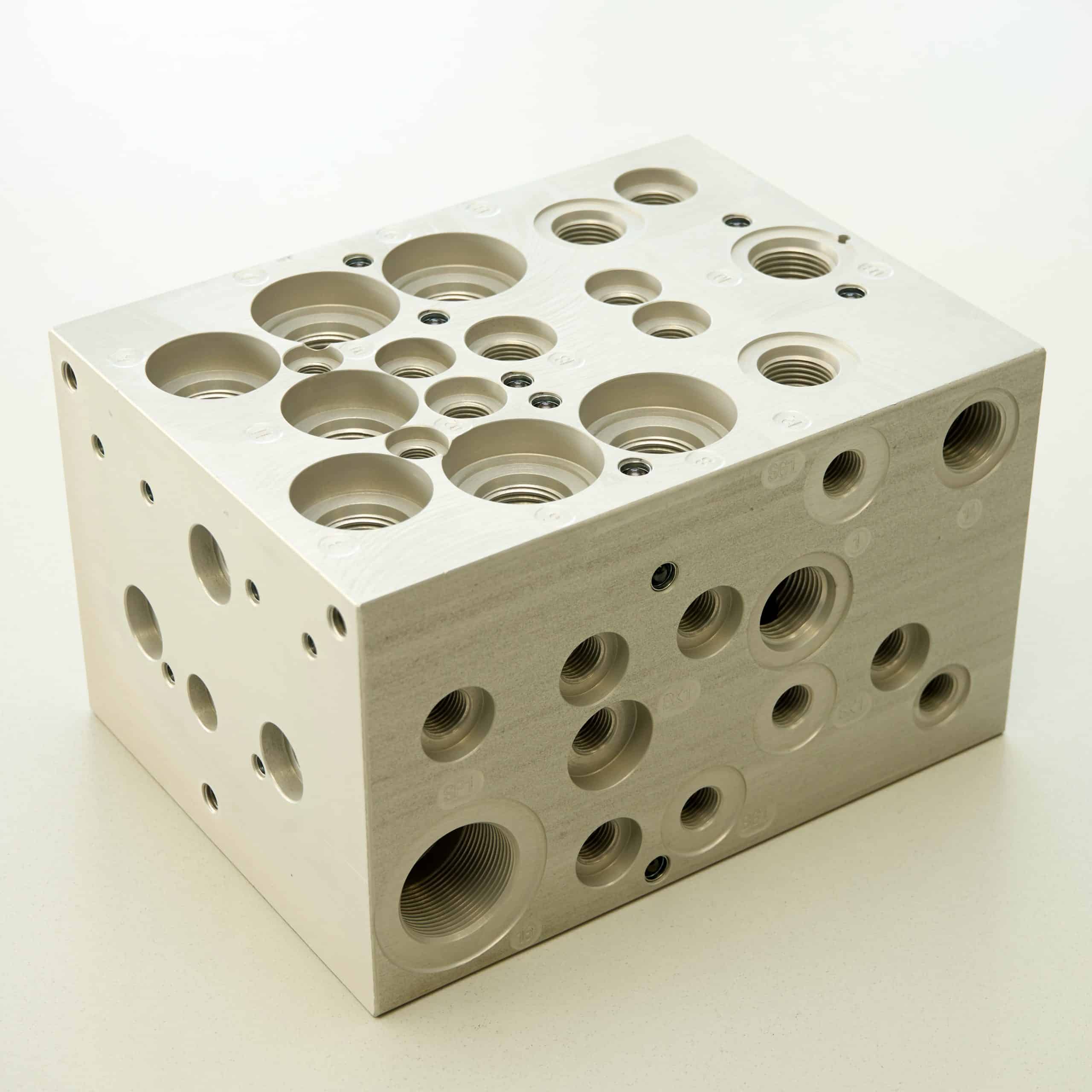
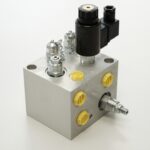
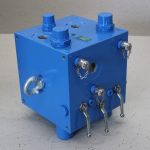
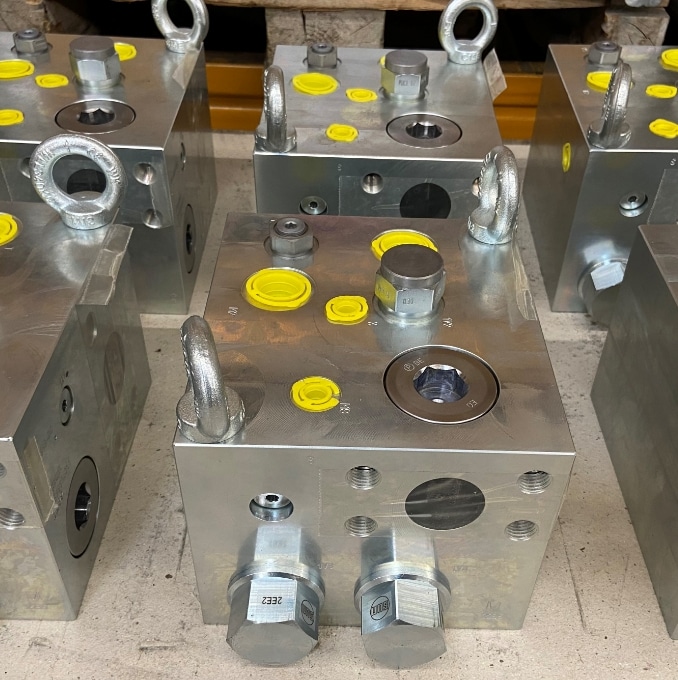
Hydraulic control blocks are the central switching element of hydraulic systems: In a compact block made of aluminum, steel, or cast iron, the valves, sensors, and channels required for a particular application are integrated into a closed assembly. This saves space compared to individual piping valves, reduces the number of leakage points, and simplifies assembly and maintenance. Motrac Hydraulik GmbH has been developing and manufacturing customer-specific and customer-protected control blocks at its Willich site since 1979 – from design through CNC machining to final assembly and functional testing. The control block and housing production has been in operation since 1979. Annually, up to 100,000 blocks leave our production; over 6800 Tons of material.

Operation of a control block

A control block performs three key functions in the hydraulic system:

The channels milled into the block connect the individual valve housings, thereby replacing external piping and reducing pressure losses. Depending on the design, the valves are either screwed directly into the housing (cartridge/screw-in valves) or mounted as structural valves on standardized connection patterns (CETOP/ISO 4401, nominal sizes NG06 to NG25).

Construction methods: Monoblock, Sandwich and chain system

Hydraulic control blocks are realized in three basic construction methods:

The monoblock design combines all functions in a single, fully milled or cast body – ideal for serial applications with a clearly defined function and for high operating pressures.

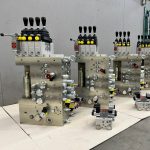
The sandwich or intermediate plate construction chains standardized input, intermediate, and end plates – or a combination of them or with individual control blocks – into a modular block. It is flexibly expandable and allows for later functional additions without new construction.

The serial plate linkage system combines several parallel control circuits in a single assembly and is used primarily where several actuators must be controlled independently of each other – for example in complex construction machinery or stationary production systems.

IMAV Hydraulics supplies connection plates, special and standard intermediate plates, adapters and series plates of its own production in all common nominal sizes.

Typical areas of application for tax blocks

Customized hydraulic control units from Motrac are used across industries:

This broad scope of industries is possible because Motrac is not limited to a fixed product range; it adapts each block to the specific application.

Selection criteria for the appropriate tax block

Materials: Aluminium, steel or cast iron

The material selection primarily depends on the operating pressure and the required weight class. Aluminium control blocks are designed for pressures up to approximately 250 bar and offer significantly lower weight – the first choice in mobile hydraulics. Steel control blocks allow pressures up to 420 bar and are used where high load cycles, shock loads or stationary industrial applications require this. Cast control blocks are economical for series production from higher batch sizes and are primarily used in initial equipment for complex-shaped functional blocks.

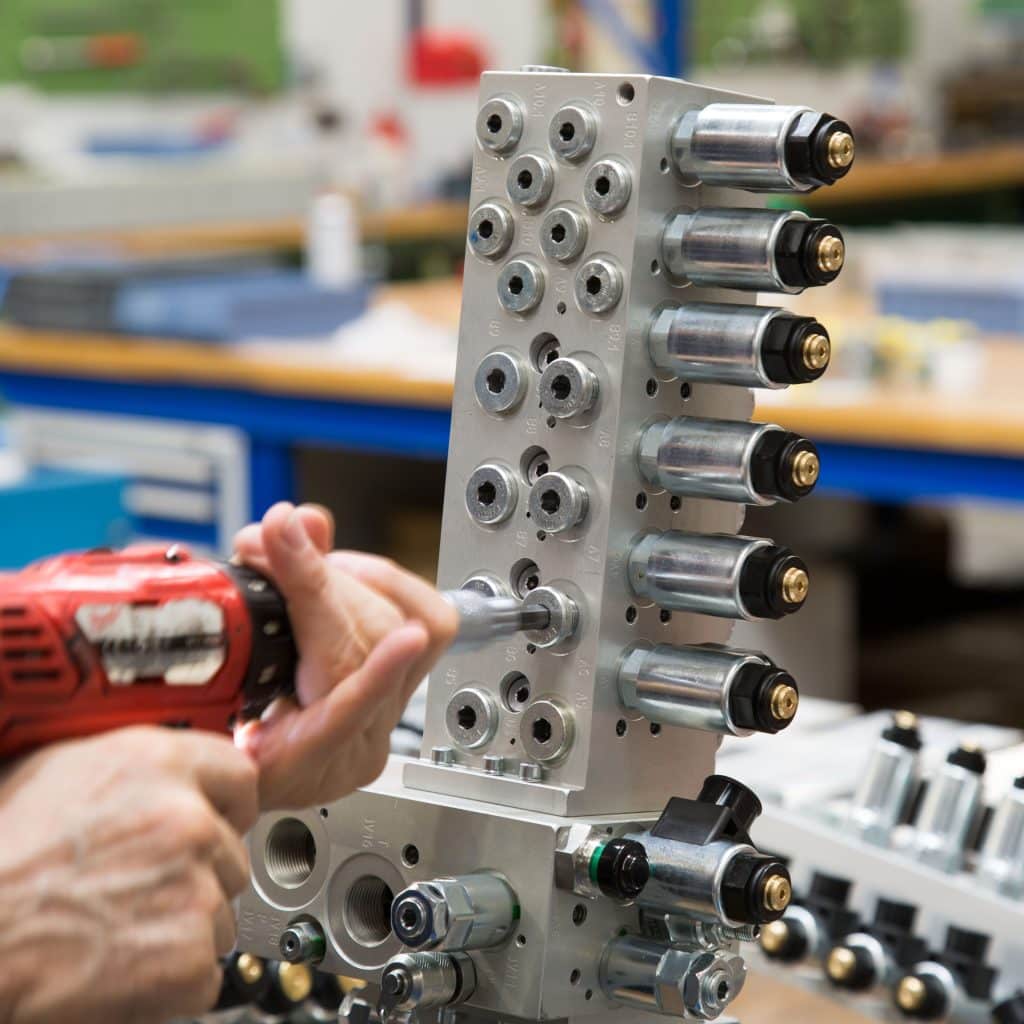
Plug-in valves (cartridge valves) are integrated directly into the block and offer the highest functional density given the required installation space. Structure valves according to CETOP/ISO standards are interchangeable regardless of the manufacturer and facilitate later servicing and spare part supply. In many projects, we combine both types of construction on a single block. Typically, plug-in pressure limiting and non-return valves are installed on the base body, combined with CETOP directional valves on the mounting surfaces.

The nominal size of a control block is based on the installed flow valves. For typical applications, the range from NG06 (up to approx. 60 l/min) over NG10 (up to approx. 150 l/min) and NG16 (up to approx. 300 l/min) to NG25 and NG32 (up to 500 l/min and more) covers most of the mobile and stationary application range. IMAV adapter plates allow the combination of different nominal sizes in one block.

Depending on the application environment, different surface treatments are recommended: anodizing or powder coating for aluminum, brining or zinc phosphate for steel; for environments with high corrosion risk, zinc plating with passivation is also available. The choice of sealing material (NBR, FKM, EPDM) depends on operating temperature and hydraulic fluid – standard mineral oil, HFC fire-fighting fluid, water-glycol or bio-degradable oils.

From concept to ready-to-install block – our manufacturing process

Each project begins with a joint requirements analysis: hydraulic schematic, available space, connection diagrams, quantities, and documentation requirements. Based on this, our design team designs the block in state-of-the-art 3D CAD technology, including channel simulation to avoid flow engineering bottlenecks. Fabrication takes place on 5-axis CNC machining centers (including DMG Mori) from high-quality aluminum and steel materials. After finishing machining, the blocks are deburred, high-pressure cleaned, and – where necessary – surface treated. The subsequent assembly of the valves according to customer specifications and an end-of-line inspection on our testing stand (tightness, function, pressure testing) ensure that each block is ready for installation and leaves the factory documented. This seamless process from development to final inspection in-house is one of the key differences from pure distributors or contract manufacturers.

Frequently asked questions about hydraulic control blocks

How does a control block differ from a connection plate?

An expansion plate usually accommodates a single control valve and connects its connections to external lines. A control block combines several valves, channels, and functions into a single assembly unit, thereby replacing much of the external piping. The transitions are seamless – a multi-station connection block is effectively already a simple control block.

Technically, production is possible from a minimum of 1 unit. Economically, a custom-made block usually makes sense when the alternative consists of at least 5 to 8 tubular individual components, or when space requirements, weight, or tightness are critical requirements. We manufacture from prototypes to several thousand units per year.

Yes. We also manufacture according to customer specifications (reverse engineering is possible with existing samples) and optimize them if necessary with regard to installation space, weight, material costs, or energy efficiency. For obsolete stock, we also supply replacement control panels for existing machines.

As standard, you will receive a hydraulic schematic, the manufacturing drawing, the part list of the installed valves, and a test report of the final inspection. Upon request, we are also able to provide material certificates, declarations of conformity, or project-specific documentation to meet customer requirements.

Consulting and project inquiry

Do you need a custom-made hydraulic control block, a replacement for an existing block, or would you like to optimize an existing hydraulic system in terms of space or costs? Our team of hydraulic engineers at the Willich site will advise you from the initial schematic design review through to construction and production, right up to final acceptance.

Contact us now or ours Download area Visit the data sheets and product overviews.